
“Learning to read requires several years of intentional instruction,” said early literacy expert Julie Christensen. And the earlier that children are introduced to the foundational skills for reading, the better.
Experts have long disagreed on what this explicit instruction should look like. People called these disagreements “The Reading Wars.” Some educators advocated for a systematic approach based on phonics and decoding instruction. Others favored giving students whole-language reading lessons focused on comprehension.
So which viewpoint won the Reading Wars?
Today, educators know that both these elements are essential. Students need explicit phonological awareness and phonics instruction to build word recognition skills. Meanwhile, immersive experiences that help build language comprehension are just as important for young learners.
Discover how the early learning nonprofit Waterford.org aligns with these findings to provide explicit, adaptive reading instruction for PreK-2nd-grade learners.
Waterford Curriculum Aligns with the Science of Reading
Waterford.org is a nonprofit with a mission to make sure all PreK-2 students have access to a high-quality learning curriculum.
Waterford’s supplemental literacy curriculum is organized around six instructional strands that align with research conducted by the National Reading Panel:
- Phonological awareness
- Phonics
- Reading fluency
- Reading comprehension and vocabulary
- Language concepts
- Communication
These strands also match with two popular frameworks of how children learn to read: the Simple View of Reading and Scarborough’s Reading Rope.
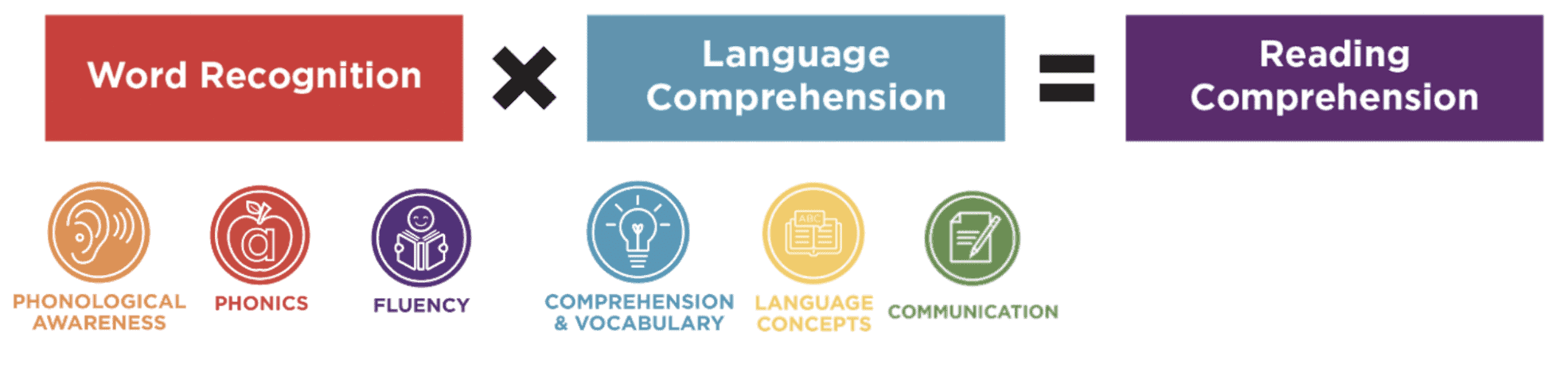
The Simple View of Reading explains that proficient reading is the product of word recognition and language comprehension skills. Phonological awareness and phonics help build reading fluency. Language comprehension enables students to use and understand language so they can engage with and respond to texts on a deeper level.
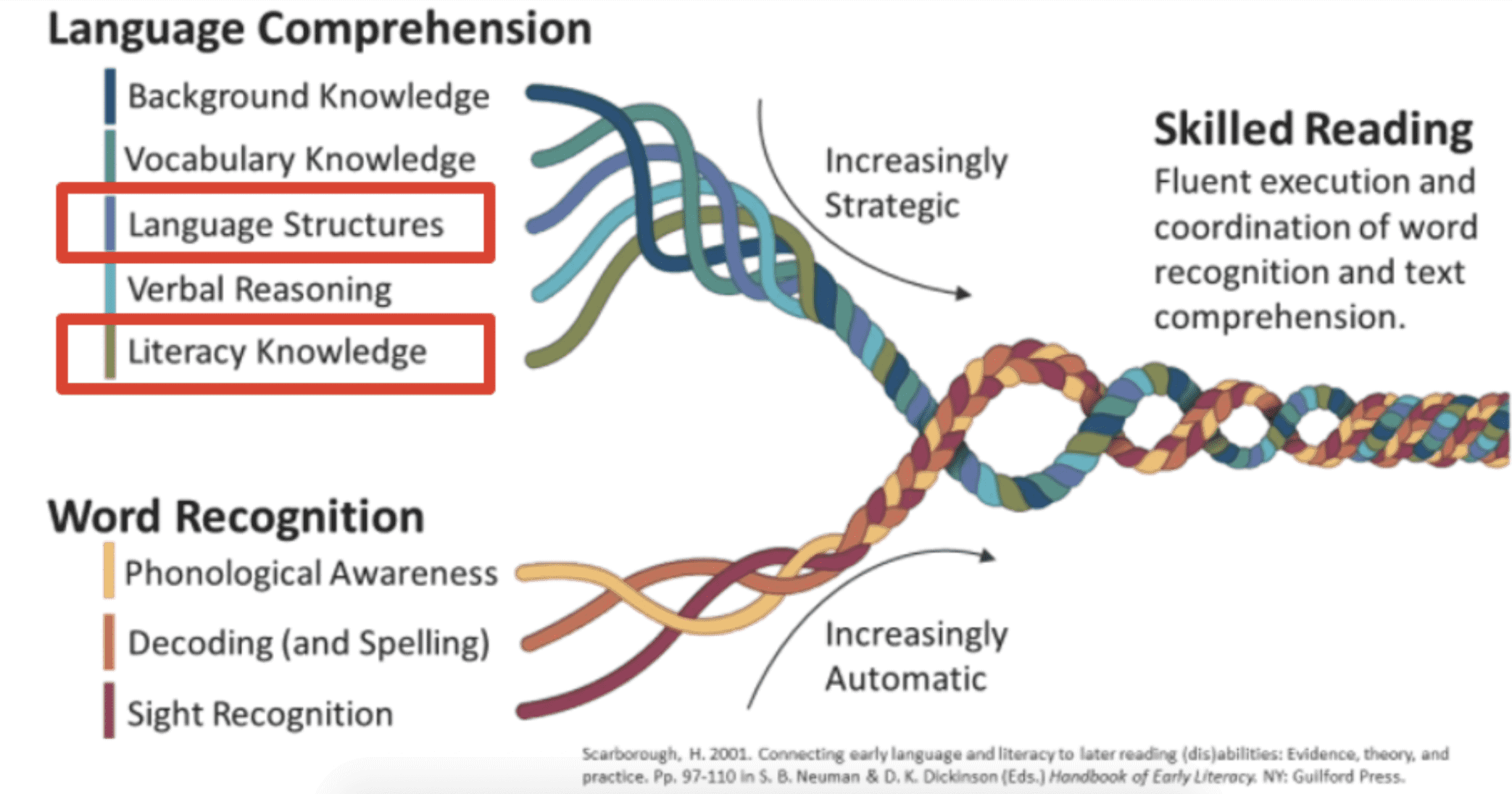
Waterford’s instructional strands also line up with Scarborough’s Reading Rope. This framework defines subskills, explaining how each of the two main factors contributes to growth for automatic and strategic reading.
Waterford Reading Academy: Support and Engagement for All Learners
Only about 5% of children can learn to read effortlessly. For the rest, it takes work.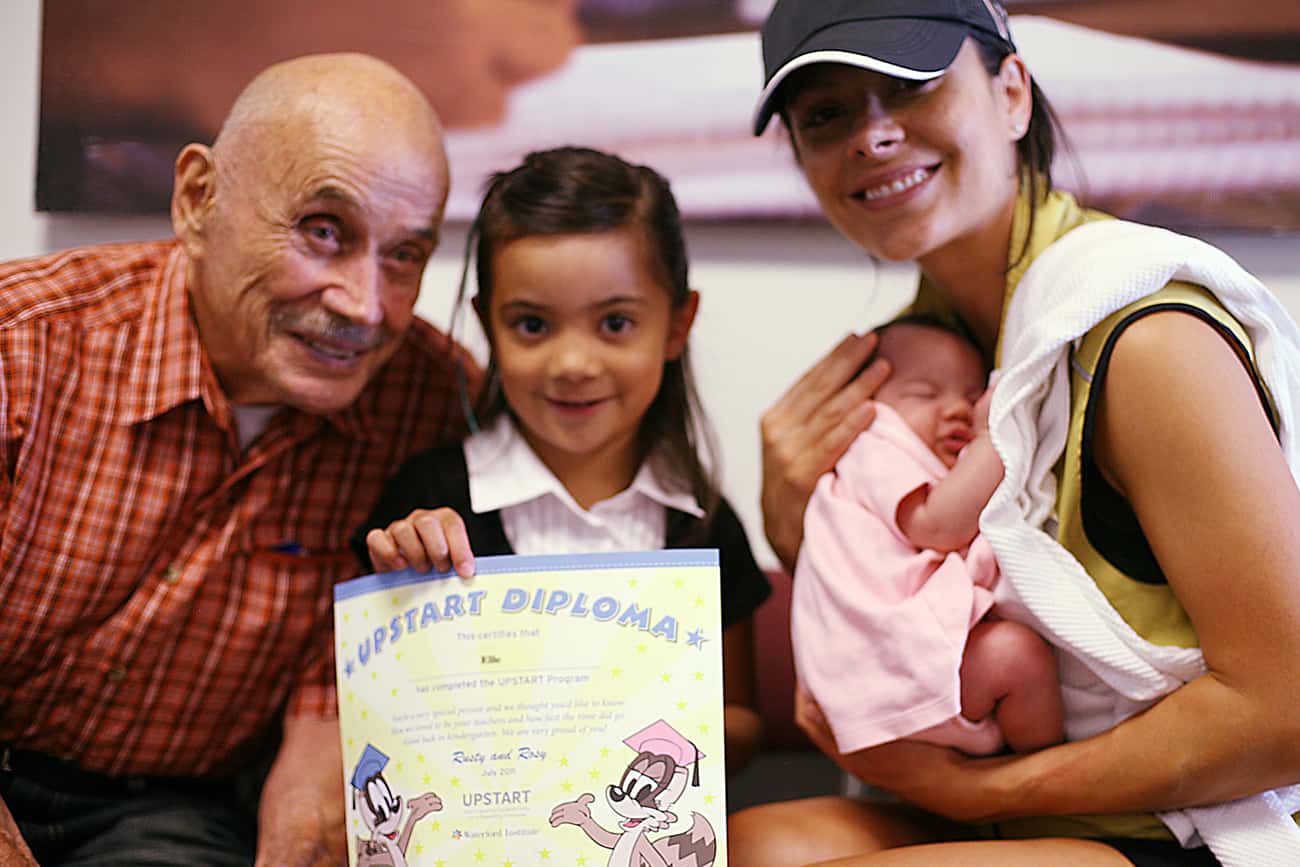
Most children require instruction based on the science of reading to become successful readers.
Waterford Early Learning is a supplemental early education program for PreK-2nd-grade children. It engages learners with adaptive instruction, helps families play a part in their child’s educational journey, and equips educators with the data they need to inform instruction.
Waterford Early Learning curriculum adapts to individual needs, meeting students where they are in their reading, math, and science abilities. This allows students to focus on areas where they need the most help. Lessons and activities are all designed to be engaging for students, with developmentally appropriate instruction, colorful graphics, and easy navigation.
Waterford Early Learning offers instructions and scaffolded support for children whose first language is Spanish.
Families stay informed with progress updates and are engaged with learning tips. Thousands of home learning resources in English and Spanish provide ideas for at-home learning. This helps them stay informed and engaged. Waterford also provides access to thousands of home learning resources available in English and Spanish. These include personalized academic and mindset activities to support young learners beyond the program itself.
This article is the first in a two-part series on the research and impact of Waterford programs. To read part two, which explores the proven impact of Waterford’s reading programs, visit How Science of Reading Research Affirms the Impact of Waterford’s Evidence-Based Reading Intervention Program.
Explore Science of Reading Resources for Educators
Read Waterford’s Science of Reading article series to learn about research-based instructional strategies for creating classroom lesson plans. Get started with:
- How to Teach Phonics & Decoding Skills
- Strategies for Teaching Reading Comprehension
- Ways to Teach Communication Skills
Find on-demand video series led by early education experts through Waterford’s Science of Reading Webinar Library, featuring topics chosen with educators in mind like:
- An Overview of the Science of Reading: From Research to Instruction
- Phonological Awareness: The Structure of Spoken Language
- Professional Learning: Teaching the Science of Reading
- And more!
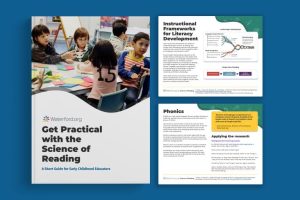
Download ‘Get Practical With the Science of Reading’
Find out more about the latest in the Science of Reading. Download this free ebook to explore the latest research on the science of reading, methods to teach phonics and decoding skills, and more.
Download E-Book